
Olive Tree Care Guide
← Back to Plant Care Tips & FAQs
Frequently Asked Questions: Olive Tree Care
Practical olive tree care advice for Brisbane and South-East Queensland, including watering, pruning, planting, fruiting, and growing olives successfully in pots or in the ground.
Olive trees are one of the best feature plants for creating a structured, Mediterranean look in SE QLD gardens. They’re loved for their silver-green foliage, sculptural branching, and toughness once established. While fruiting can vary depending on climate and variety, olive trees are still an excellent choice for courtyards, entrances, pots, avenue planting, and low-water landscapes.
Q: Do olive trees grow well in Brisbane and SE QLD?
Yes — olive trees generally grow very well in Brisbane and South-East Queensland when planted in a full sun position with excellent drainage. They handle heat, dry periods, and exposed conditions well, once established.
The main challenge in SE QLD is usually not growth — it’s drainage and humidity. Olive trees dislike wet feet, heavy soil, and poor airflow. If planted in the right spot, they’re one of the most reliable and attractive feature trees for this climate.
Q: What position is best for an olive tree?
Olive trees perform best in:
- Full sun — ideally 6–8+ hours per day (summer and winter)
- Open, airy positions with good airflow
- Well-drained soil (all year round)
- Well-fed in growing season
- Pruning in growing season to thicken foliage
- Site where water does not sit around the roots, after rain
They're perfect for:
- feature planting
- courtyards
- front gardens
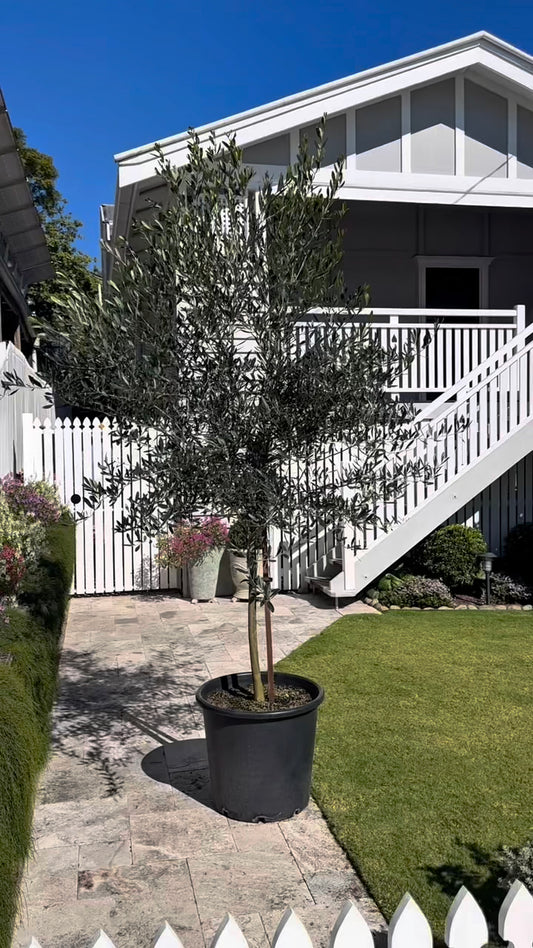
- large pots
- Mediterranean-style landscapes
- formal rows or avenue planting
- hedging
Avoid deep shade, boggy soil, or enclosed damp spots.
Q: What soil is best for olive trees?
Olive trees need free-draining soil. This is the biggest factor in long-term success.
Best results come from:
- sandy or loamy soil
- improved garden beds with good drainage
- raised planting if the site holds water
- premium potting mix for containers
If your soil is heavy clay or tends to stay wet after rain, mound the planting area or plant into a raised bed. Avoid burying the trunk too deeply, and keep mulch clear of the base.
Q: When should I prune an olive tree?
Olive trees respond well to annual pruning.
Best times are usually:
- Late winter (main shape)
- Early spring: Encourage branching.
- Early summer (light tip): Keep compact after fast growth.
- Or after fruiting, where applicable.
Pruning goals:
- promote lollypop shape and foliage flush
- maintain a balanced shape
- remove dead, damaged, or crossing branches
- improve airflow through the canopy
- allow more light into the centre of the tree
Avoid heavy pruning in extreme summer heat. A lightly opened canopy helps reduce humidity issues and keeps the tree looking clean and structured.
Q: How fast do olive trees grow?
Olive trees are generally moderate-fast growers. Growth rate depends on:
- sun exposure
- drainage
- watering
- feeding
- temperature
- whether they are in pots or in the ground
In ideal conditions, they steadily develop into beautiful, sculptural feature trees. Growth is typically stronger in warm seasons and slower through cool periods.
Q: What's the ideal time to plant?
Autumn (March–May) is ideal, giving trees time to establish before summer heat. In Brisbane and other warm SE QLD areas, planting in autumn or winter reduces watering needs while roots develop. Spring planting also works, but monitor moisture closely through the first spring and summer—our spring (SE QLD) often feels like early summer.
Q: How often should I water an olive tree?
Water deeply during establishment, then reduce frequency as the roots develop.
For the first 4–8 weeks, water well and consistently to establish and ensure ground has good drainage. In warm weather, this may mean watering daily or every second day, depending on pot size, soil type, drainage, and exposure.
In SE QLD, olive trees usually need more attention through spring, summer, and dry windy periods, especially in pots.
Important: Avoid constantly wet soil. Overwatering and poor drainage are more harmful than short dry spells. Allow to dry out between watering. Monitor summer vs winter aspect and drainage to titrate watering schedule appropriately.
Q: Do olive trees need fertiliser?
Yes, but don’t overdo it.
Feed with a balanced slow-release fertiliser during the active growing season, usually in spring and again in late summer.
Avoid pushing excessive soft growth with too much nitrogen, especially if fruiting is a goal. Healthy growth, good drainage, and strong sunlight matter more than heavy feeding.
Q: What pests should I watch for on olive trees?
Common issues include lacewing bug. Regular inspection and good air circulation help prevent problems. Use horticultural oil or insecticidal soap for treatment. Regular light pruning and good airflow help maintain their natural resistance. Don't neglect to avoid pest.
Q: What problems should I watch for?
The most common olive tree issues in SE QLD are usually related to site conditions rather than the tree itself.
Watch for:
- yellowing leaves from poor drainage
- leaf-drop from overwatering
- root stress in waterlogged soil
- reduced growth (thin) in too much shade
- messy growth if not pruned lightly
- poor fruiting in low sun or humid sheltered spots
Most problems improve by correcting:
- drainage
- airflow
- sunlight
- watering frequency
Planting Tips
Q: Do olive trees produce fruit in SE QLD?
They can, but fruiting may vary depending on:
- variety
- plant maturity
- winter chill
- sunlight
- runing
- seasonal weather conditions
In SE QLD, many olive trees are best treated as ornamental feature trees first, with fruiting as a bonus. If fruit production is important, plant in the sunniest position possible and avoid overfeeding with high-nitrogen fertilisers.
Q: Are olive trees good for screening or hedging?
Not as a dense formal privacy hedge but perfect as a statement screen to create a coastal look with real street appeal. If you want a sculptural modern coastal or Mediterranean look, olive trees are an excellent option.
Olive trees are versatile and also suited to:
- feature planting
- informal screening
- avenue planting
- formal rows
- courtyard structure
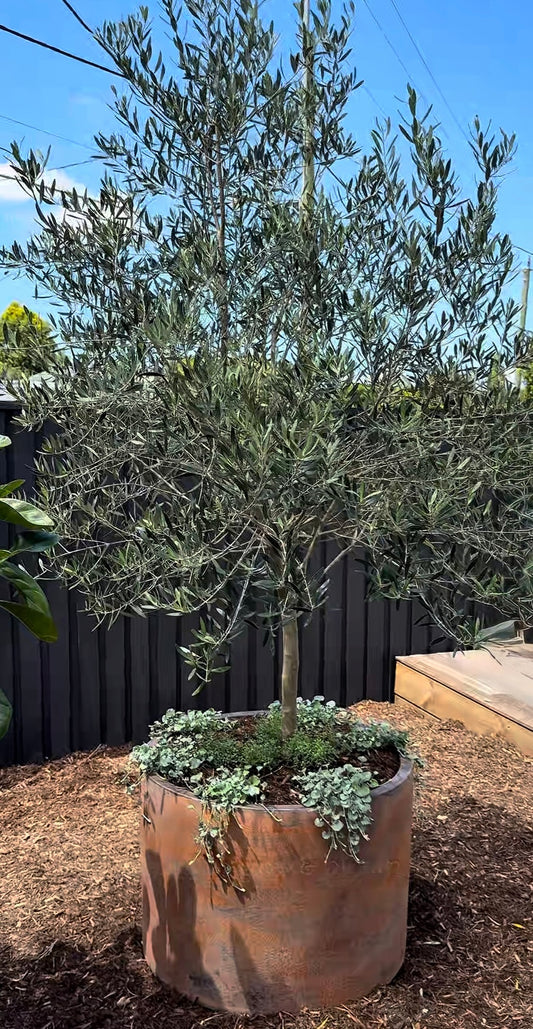
- statement pots
- paired entry statement
- soft screening
- topiary
Q: Can I grow an olive tree in a pot?
Yes — olive trees are excellent in large pots and containers, especially in courtyards, entrances, and patios.
For best results:
- use a high-quality, free-draining potting mix
- choose a pot with strong drainage holes
- place in full sun
- water more regularly than in-ground trees
- feed during the growing season
- lightly prune to maintain shape and size
Pot-grown olive trees dry out faster than garden-planted trees, so they need more regular monitoring, especially in hot weather.
Olive Tree Planting Tips for Brisbane & SE QLD
- Plant in full sun
- Prioritise excellent drainage
- Water deeply during establishment
- Mulch 5–7cm deep, keeping mulch clear of the trunk
- Avoid constantly wet soil
- Lightly prune to maintain airflow and shape
- Use pots or raised planting, where drainage is poor
Why choose an olive tree?
Olive trees are one of the most versatile feature plants perfect for SE QLD gardens. They suit modern, coastal, Mediterranean, and formal garden styles, and work beautifully in:
- front entries
- courtyards
- poolsides
- large pots
- avenue planting
- dry garden designs
Their value is in their year-round structure, elegant foliage, and timeless garden appeal.
Explore related guides
Browse our range of olive trees for Brisbane and South-East Queensland delivery.
Need more specific advice? Contact us for personalised care recommendations for your native trees!
Want care tips for your Olive Trees delivered to your inbox? Subscribe to our newsletter for seasonal advice and plant updates.
Explore Lilly Pilly screening & hedging varieties:
Shop All Olive Trees
-
Olea Europaea 'Frantoio' Mediterranean Feature Olive Tree
Regular price From $299.00 AUDRegular priceUnit price per -
Olea Europaea 'Kalamata' Olive Tree
Regular price From $29.00 AUDRegular priceUnit price per -
Olea Europaea 'Manzanillo' Olive Tree
Regular price From $349.00 AUDRegular priceUnit price per -
Olea europaea ‘Correggiola’ Olive Tree
Regular price $99.00 AUDRegular priceUnit price per



Want help applying this to your own garden?
Book a garden consult for practical advice on plant selection, feature trees, screening and garden refresh ideas suited to Brisbane conditions.